Gender Equality Programme
Brief #1 | Gender Equality in decision-making and employment in the wider Black Sea region
6 March 2026
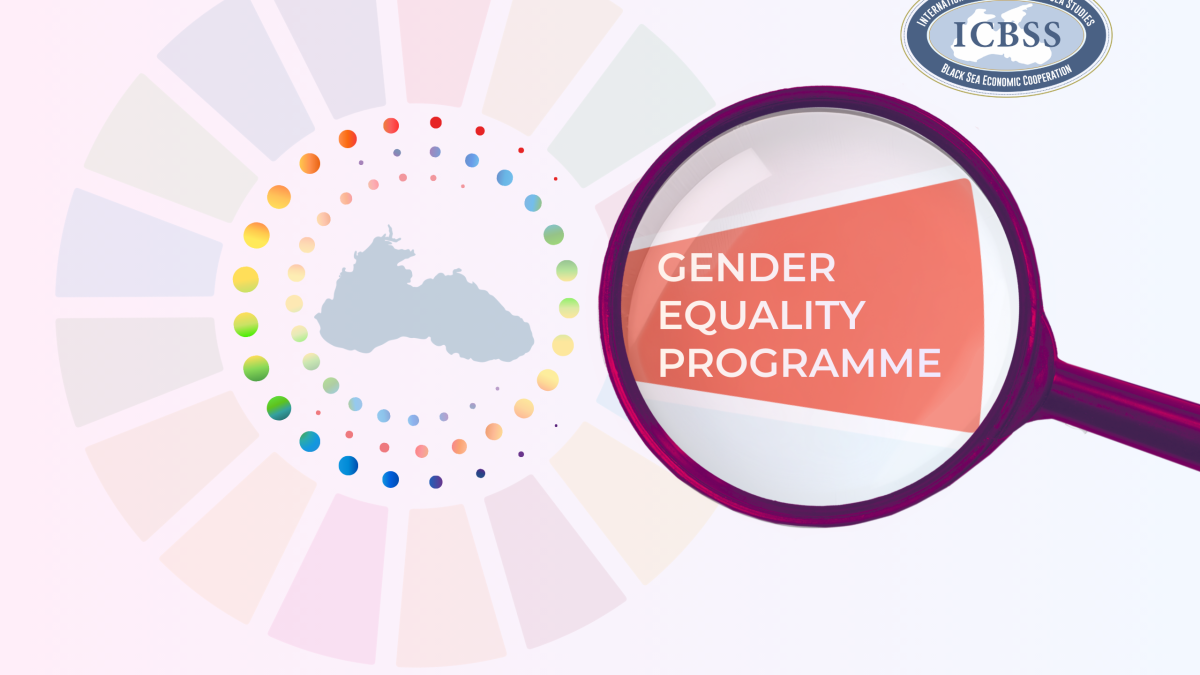
On the occasion of International Women’s Day (8 March), the International Centre for Black Sea Studies (ICBSS) is launching the Gender Equality Programme (GEP).
The Gender Equality Programme (GEP) uses data, information, and statistics to study, assess and monitor the status and progress of gender equality across the 13 Member States of the Organisation of the Black Sea Economic Cooperation (BSEC). Through this science-based approach, the Gender Equality Programme aims to raise awareness and contribute to policy advocacy and stakeholder mobilisation.
To mark the occasion, the ICBSS publishes the first Brief on “Gender Equality in decision-making and employment in the wider Black Sea region”. The document aims to provide comprehensive information on key indicators regarding gender equality and parity in decision-making and employment across the 13 BSEC Member States.
Read the full report HERE
HIGHLIGHTS
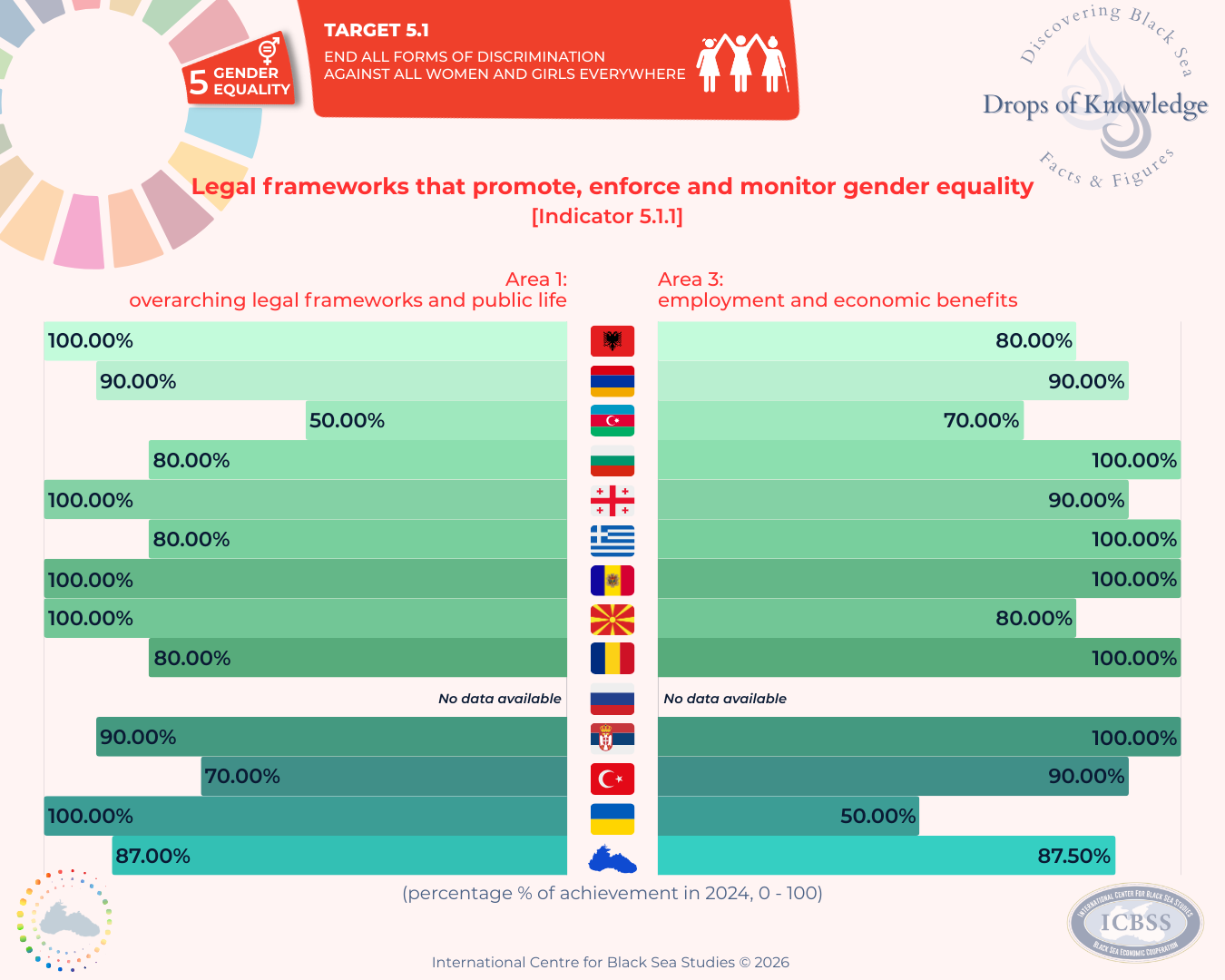
- In 2024, the BSEC countries’ average was at 87.08% in the areas concerning overarching legal frameworks and public life, and employment and economic benefit.
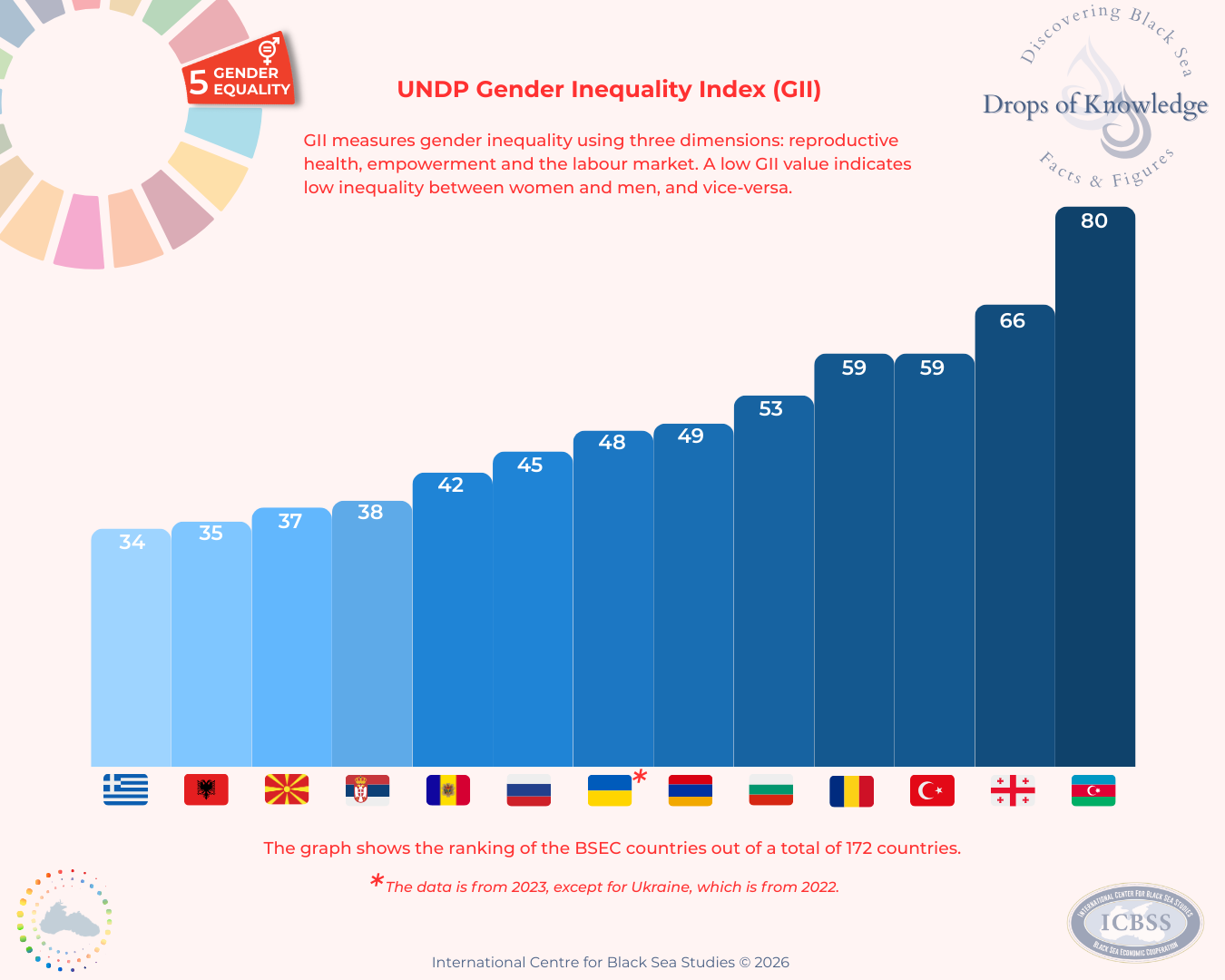
- Regarding gender inequalities in three key dimensions (reproductive health, empowerment, and labour market), in 2023, Azerbaijan ranked 80th in 172 countries, the lowest among the BSEC13; while Greece (34), Albania (35), and the Republic of Moldova (37) ranked the highest.
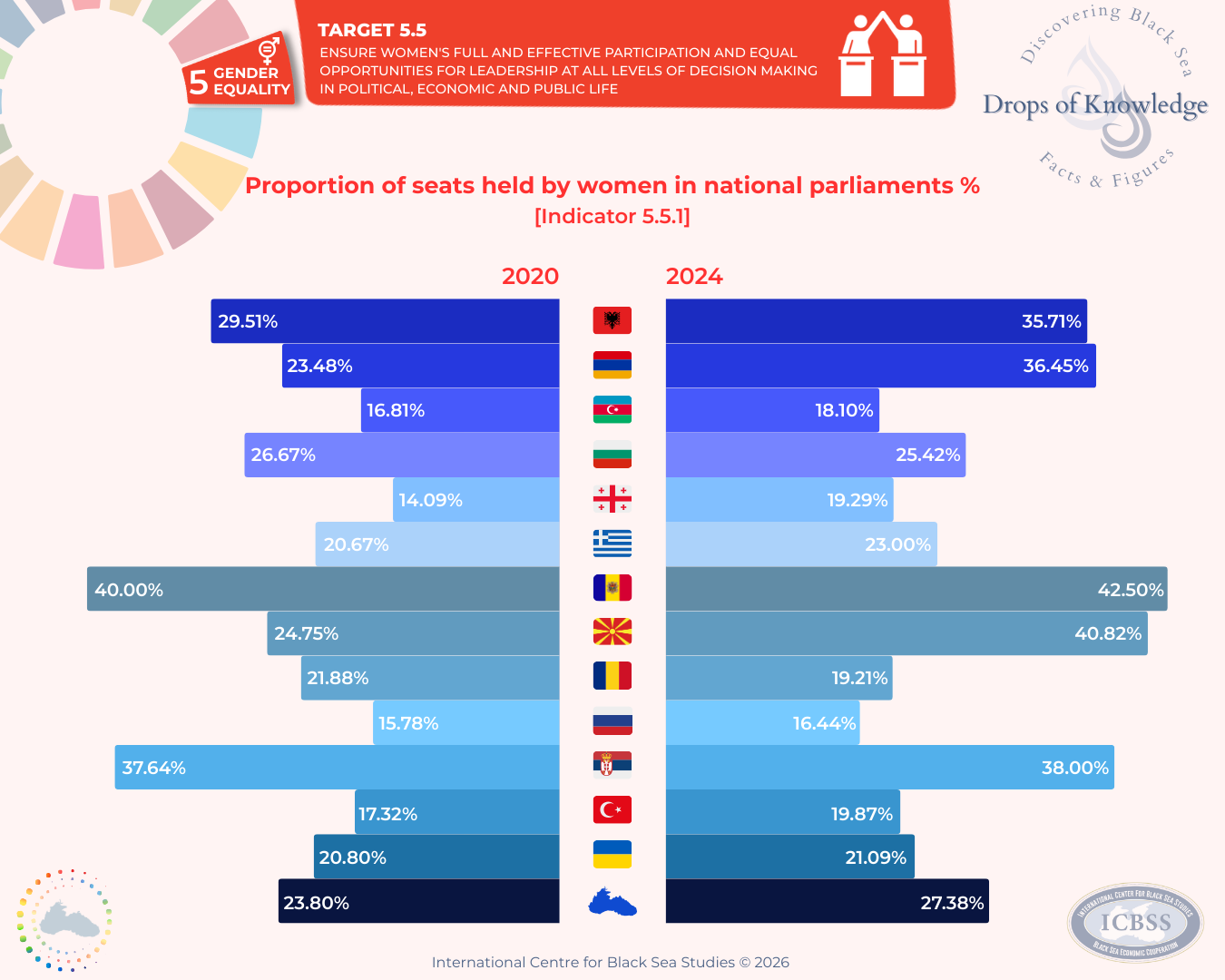
- Women continue to have limited representation in decision-making and leadership positions across the 13 countries of the region.
- In 2024, women held 27.38% of elected seats in national parliaments (794 seats of total 3291) in the BSEC13, up to 8.65% from 2015, and only 3.58% from 2020.
- The Republic of Moldova and the Republic of North Macedonia are at the highest positions with 40.82% and 42.50% respectively, whereas the Russian Federation has the lowest percentage at 16.44%.
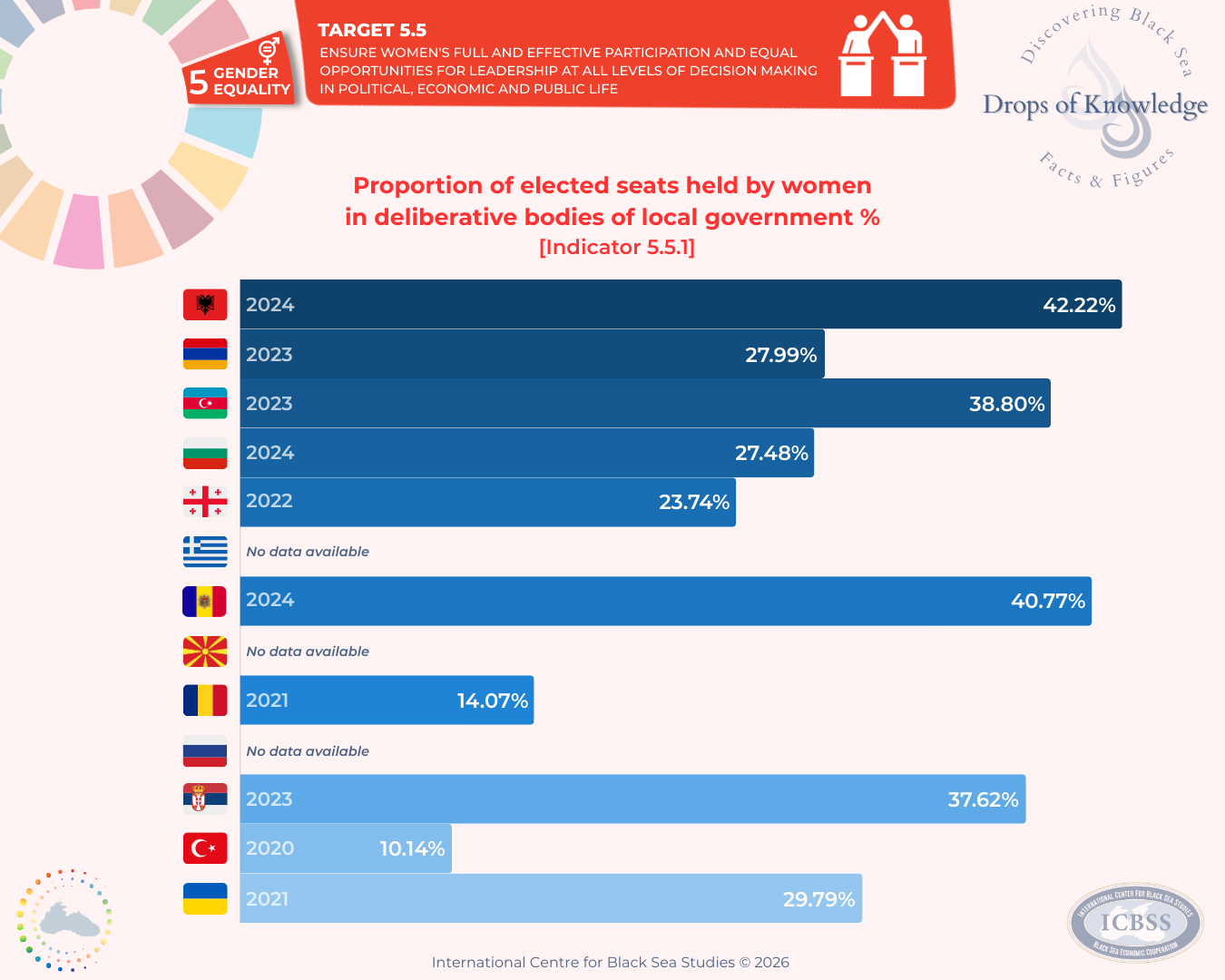
- The proportion of elected seats held by women in local government varies significantly across the BSEC13. Albania and the Republic of Moldova rank higher at 42.22% and 40.77% respectively, whereas Romania and Türkiye are much lower, at 14.07% and 10.14% respectively.
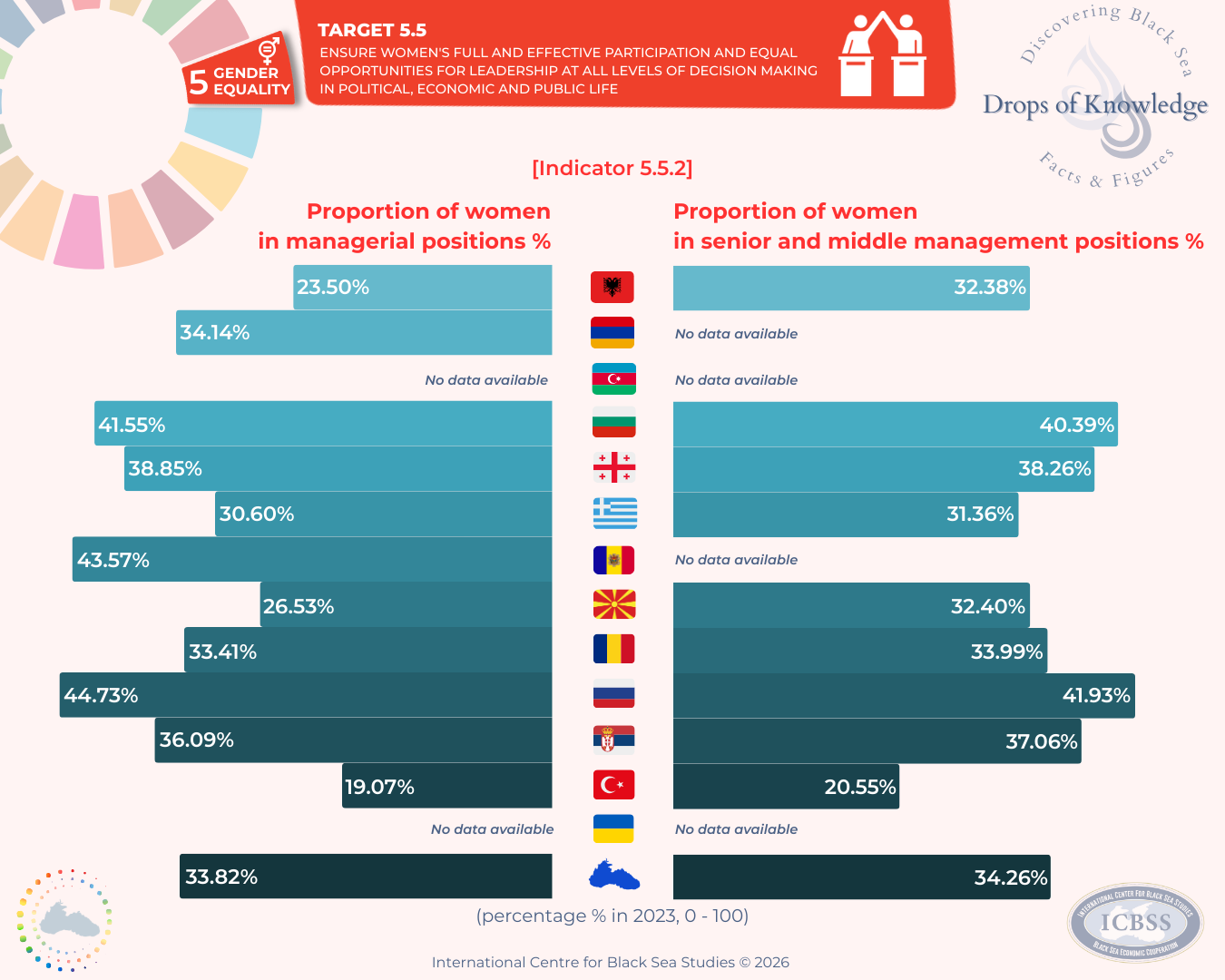
- The UNSDG Indicator 5.5.2 that measures the proportion of women in managerial, senior, or middle management positions, notes limited improvement over the past decade across the BSEC region; from 31.5% in 2015 to only 34.5% in 2023.
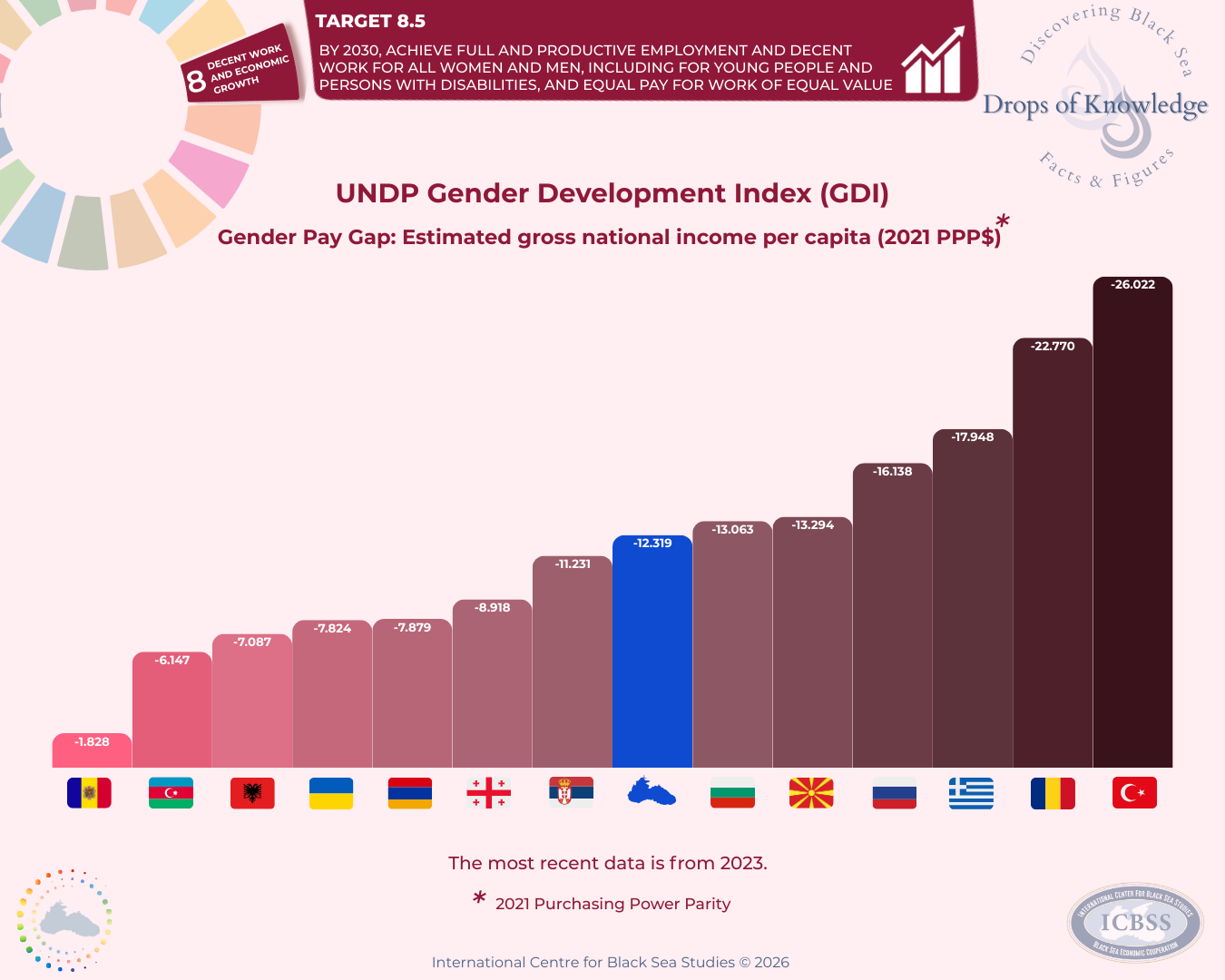
- As of 2023, the smallest gender pay gap is observed in the Republic of Moldova, at -1,828 (2021 PPP$); while the highest is in Romania at -22,770 (2021 PPP$) and Türkiye at -26,022 (2021 PPP$). Worth noting that the three BSEC EU Member States -Bulgaria, Greece, Romania- rank above the BSEC average at the highest ranks.
-
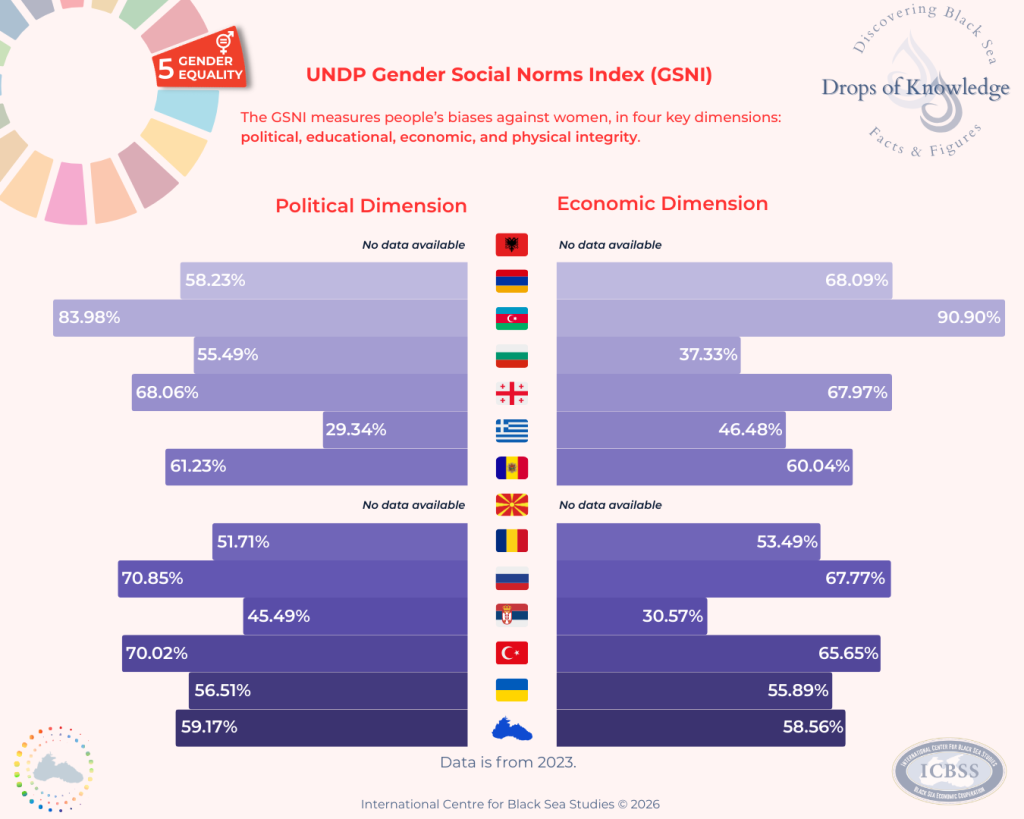
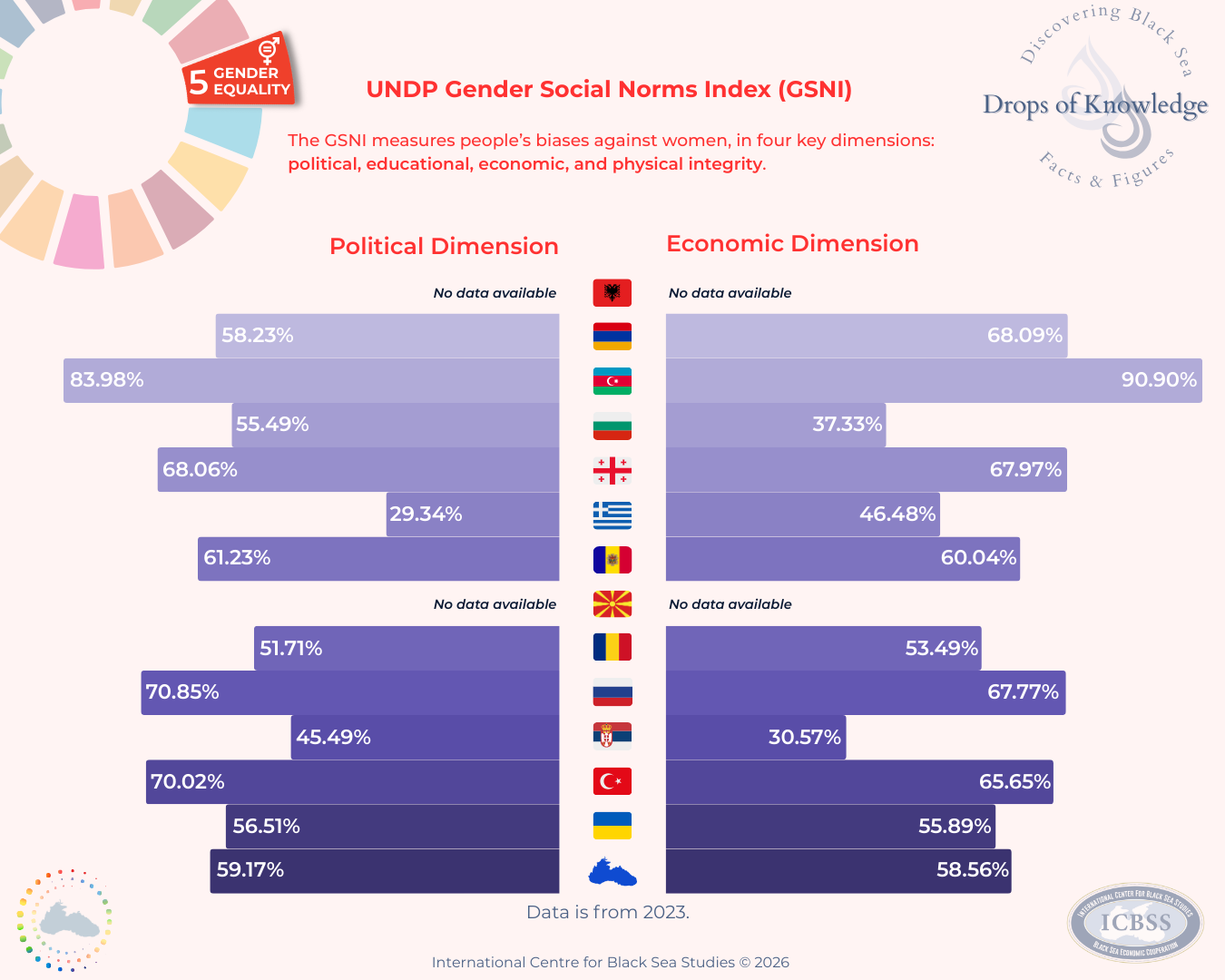
These findings highlight that structural and legal reforms are not enough to achieve gender equality. Persistent social norms and stereotypes feed discriminatory behaviours and undermine efforts to human development. As per the 2023 UNDP Gender Social Norms Index (GSNI) that measures people’s biases against women, 85 in 100 persons (85.76%) across the 13 countries of the BSEC region, have at least one bias against women.
Read the full report HERE
---
Date of the report: 6 March 2026
Written by: Georgia Chantzi, International Centre for Black Sea Studies
Graphic design: Fani Sampani, International Centre for Black Sea Studies
International Centre for Black Sea Studies (ICBSS) © 2026