Webinar on Culture & Health
The role of creative arts in promoting mental wellness
Wednesday 13 May 2026
Press - release | Video
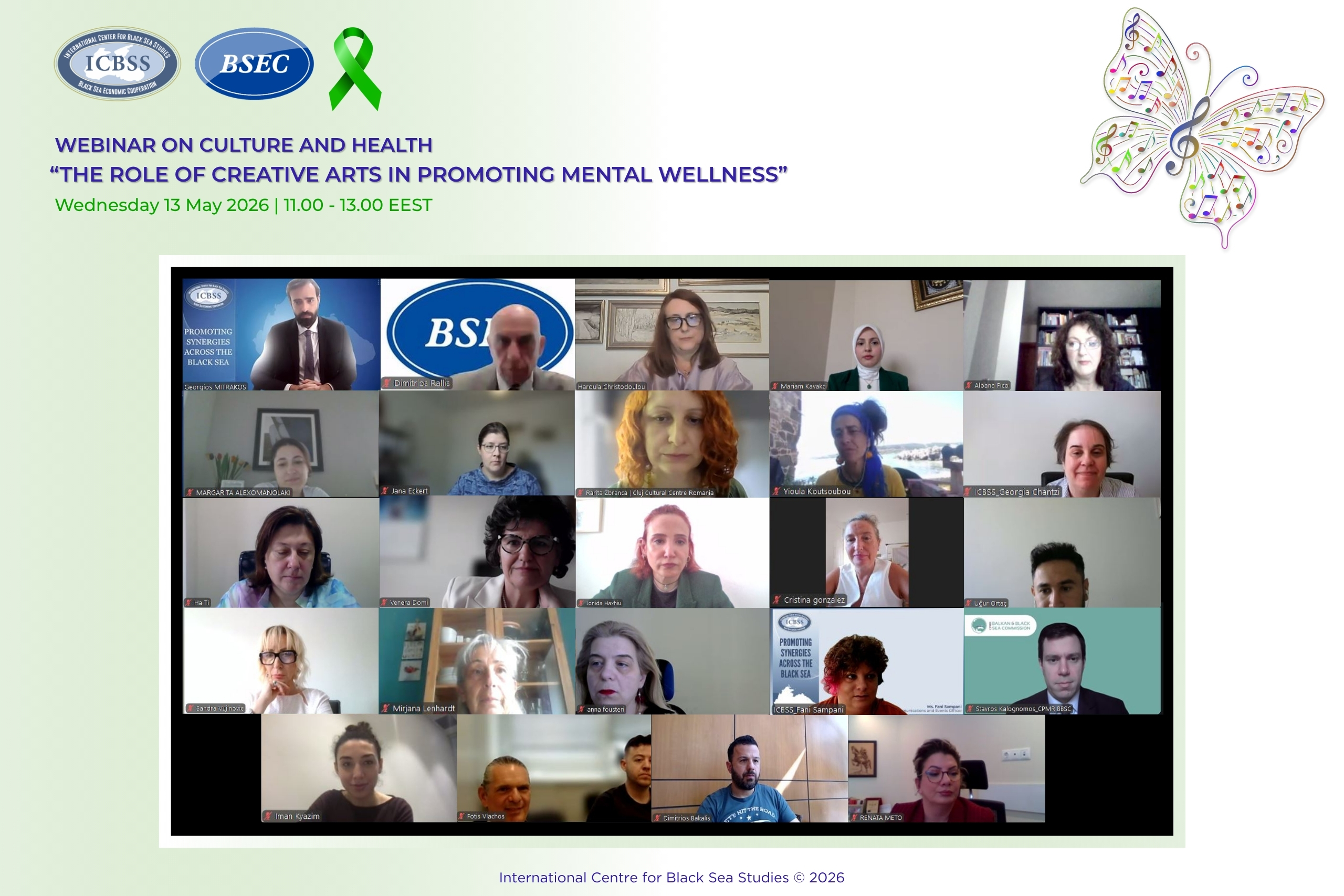
On Wednesday 13 May 2026, the International Centre for Black Sea Studies (ICBSS) in cooperation with the Permanent International Secretariat of the Organization of the Black Sea Economic Cooperation (BSEC PERMIS), organised successfully a Webinar on Culture and Health with title, “The role of creative arts in promoting mental wellness”.
More than 60 participants joined the online event that provided an exchange platform for health professionals and culture experts, with the aim to increase understanding of how creative arts can support mental health and emotional wellbeing; share evidence-based insights showcasing the positive impact of creative arts on people and communities; raise awareness and initiate an open dialogue on mental health, in order to support inclusivity and mitigate societal stigma and discrimination. [Concept Note]
Key takeaways:
-
- Scientific research for mental health has increased over the past years, underscoring the importance of mental wellbeing as equal to physical health.
- Advanced scientific evidence shows that the arts can have a positive impact on brain functions, related to both neurodegenerative diseases and mental disorders.
- Engagement with performative and creative arts should be aimed at all people, regardless of age or medical condition.
- Cultural engagement for health is currently in its early stages, therefore awareness needs to be intensified for more people to endorse it.
- Efforts to support the interaction of culture with mental wellbeing is often supported more by culture practitioners than healthcare professionals.
- Despite increased efforts, especially following the COVID-19 pandemic, there are still societal constraints, such as stigma and isolation, associated to mental health challenges.
About the webinar
The webinar was moderated by Ms. Haroula CHRISTODOULOU, Board Member, Association of Inter-Balkan Women’s Cooperation. In the first panel on 'Understanding Mental Health: Common Challenges and Misconceptions', Doç. Dr. Mariam KAVAKCI, Advisor to the President, Presidency of the Republic of Türkiye, provided scientific evidence on the importance of cultural engagement for the mitigation of both neurodegenerative diseases, such as Parkinson’s, and mental disorders, such as depression and anxiety. [Kavakci Presentation] Professor Albana FICO, University of Medicine in Albania, highlighted the increased efforts in the country to support a community-based mental health strategy, promoting innovative actions across society, tailored to the needs of each age group. [Fico Presentation]
In the second panel on 'Experiencing Art for Wellbeing', Dr. Margarita ALEXOMANOLAKI, Head of Performing Arts and Cinema Directorate, presented the groundbreaking ‘Art on Prescription’ National Programme, developed and implemented by the Hellenic Ministry of Culture, establishing a structured framework for incorporating art into therapeutic practices. [Art on Prescription Video] Ms. Jana ECKERT, Coordinator Culture on Prescription Erasmus+ project, Director at Institute for Social Infrastructure, continued with the presentation of an innovative project, the Culture on Prescription Erasmus+ project, that was driven by the need to establish strategies for the promising concept of social prescribing to combat loneliness. [Eckert Presentation]
Discussion continued with the input of culture experts, sharing their insights from community-based practices of cultural engagement for mental wellbeing. From Romania, Dr. Rarița ZBRANCA, Programme Director at Cluj Cultural Centre shared the example of the ‘Music for Motherhood’ project, an initiative aimed to tackle post-partum depression through music, implemented at pilot-level in Romania, Italy, and Denmark. From Greece, Ms. Yioula KOUTSOUBOU, Zero Waste Artist and Educator, emphasised the positive impact of art engagement, sharing examples from her work in refugee camps, with school groups, and troubled youth.
Read the full Press-release HERE
Context
Mental health is an essential element of people’s overall wellbeing, yet it is still often misunderstood and affected by societal stigma.
The UN has recognized mental health as equally important as physical health and urges its Member States to provide “equitable and universal access to health care and assurance of mental and social well-being, as well as promotion of mental health and well-being”.
Mental health challenges among adults are rooted in multifaceted and often interlinked factors, reflecting the complexity of modern life. These are further exacerbated by limited awareness on mental health issues that feeds societal stigma, discrimination, and isolation. People facing a mental disorder are often discouraged from seeking treatment or professional support due to stigma, lack of knowledge about available services, or concerns about costs.
Innovative approaches to treatment and mitigation
With more people affected by mental health challenges, there is a growing need for effective support services and interventions tailored to the diverse needs of adults in modern society. The creative arts can play a significant role in fostering mental wellness by providing people with the means to express emotions, process experiences, and connect with others.
Participatory art programmes provide frameworks for understanding mental health, foster community support, and offer coping mechanisms that strengthen social, emotional, and psychological resilience. Enhancing participation in the arts may contribute to enhancing overall wellbeing.
The ICBSS – BSEC Webinar “The role of creative arts in promoting mental wellness” brought together health professionals, culture experts, representatives of policy and civil society, to share insights and perspectives on the effect of creative arts to mental wellbeing. Through expert talks and interaction with the audience, the webinar aimed to raise awareness on mental health, promoting cultural engagement as a means to reduce stigma and foster inclusivity.
Objectives
- To increase understanding of how creative arts can support mental health and emotional wellbeing.
- To share evidence-based insights showcasing the positive impact of creative arts on people and communities.
- To raise awareness and initiate an open dialogue on mental health, in order to support inclusivity and mitigate societal stigma and discrimination.