BSEC - ICBSS Webinar
Women Diplomats at the Forefront: Promoting Dialogue and Development in the Black Sea
10 March 2026
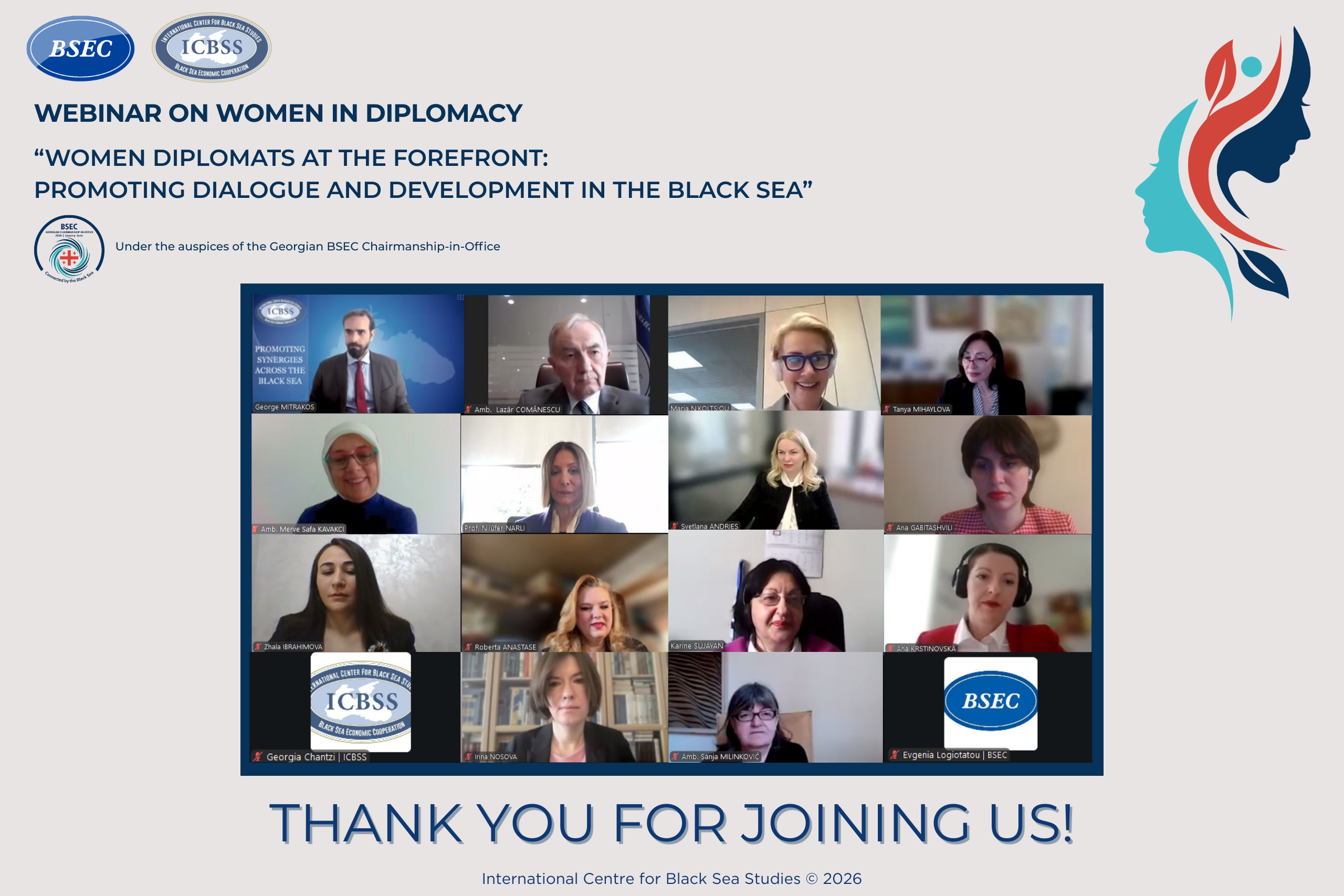
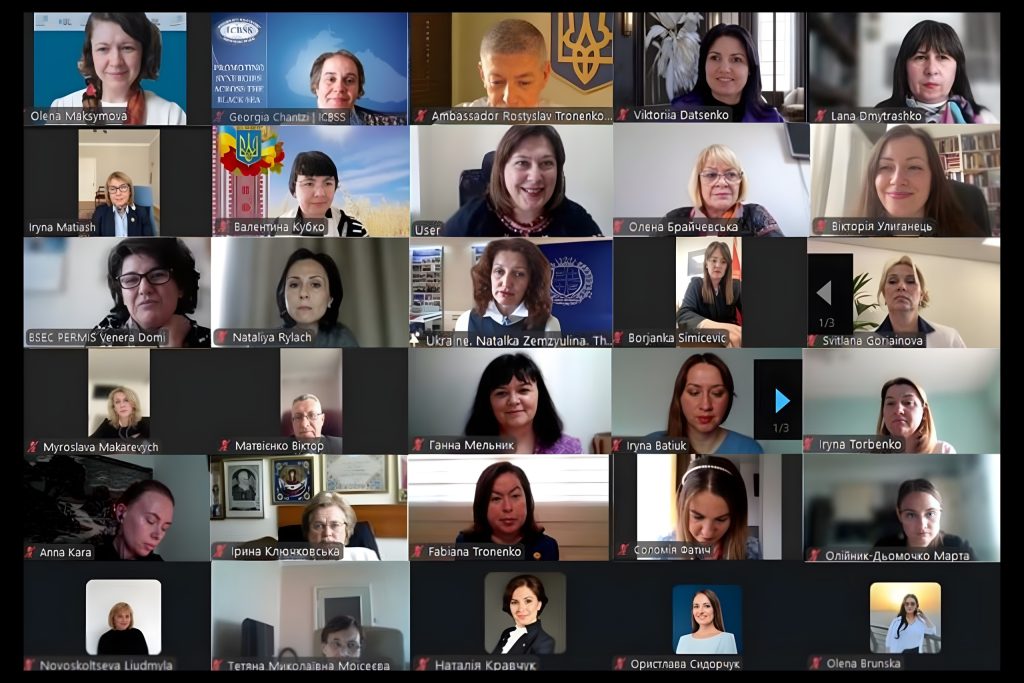
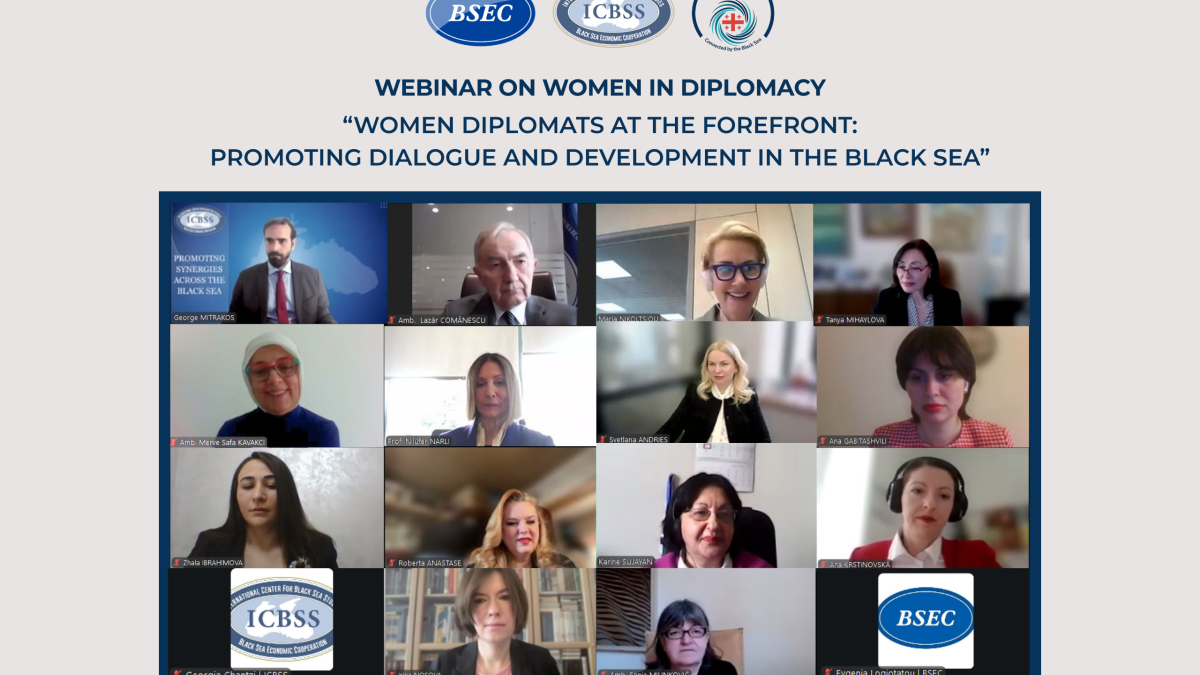
On Monday 9 March 2026, the Permanent International Secretariat of the Organization of the Black Sea Economic Cooperation (BSEC PERMIS), in cooperation with the International Centre for Black Sea Studies (ICBSS), organised successfully the webinar “Women Diplomats at the Forefront: Promoting Dialogue and Development in the Black Sea”, under the auspices of the Georgian BSEC Chairmanship-in-Office.
On the occasion of International Women’s Day (8 March), the webinar brought together senior women diplomats and practitioners from the BSEC Member States to discuss challenges and share experiences in supporting gender-inclusive approaches in confidence building, policy-making, and regional development.
The webinar was hosted by Ms. Maria NIKOLTSIOU, News Anchor-Journalist at Alpha TV Greece. On behalf of the organisers, the welcome speech was delivered by H.E. Amb. Lazăr COMĂNESCU, BSEC PERMIS Secretary General, delivered the welcome address, noted that diplomacy is not only about agreements and policies, but about people who make cooperation possible. Ambassador Comănescu underlined that “women diplomats have continuously contributed to building bridges and enriching our collective efforts”.
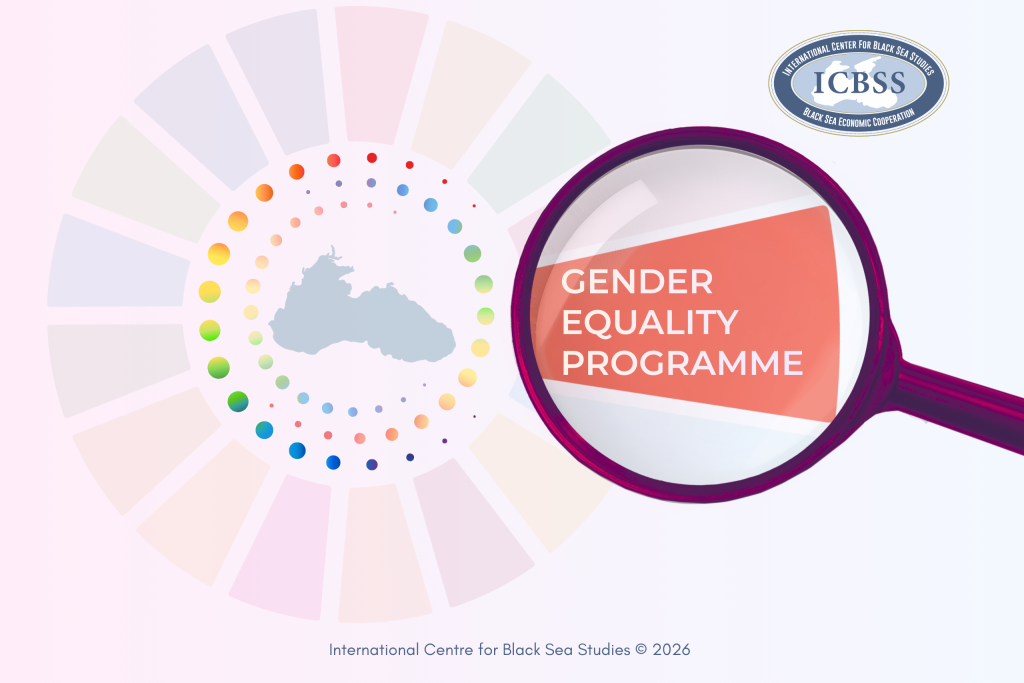
In his introductory remarks, the ICBSS Director General, Mr. Georgios MITRAKOS, noted that, despite recent years’ progress, there is still room for improvement. He emphasised that persisting social norms and stereotypes continue to feed discriminatory behaviours, hindering efforts to advance with gender equality across the BSEC13. Concluding his remarks, Mr. Mitrakos announced the launch of the Gender Equality Programme, a new initiative by ICBSS, that aims to support a continuous public discourse on gender equality in the wider Black Sea region.
On behalf of the Georgian BSEC Chairmanship-in-Office, Ms. Ana GABITASHVILI, Counsellor in the Regional International Organizations Division at the Department of International Organizations at the Ministry of Foreign Affairs of Georgia, stressed that, it is a fact that the weight of conflicts falls on women who experience increased displacement and violence. Yet, women are the least represented in the peace talks and decision-making mechanisms. Ms. Gabitashvili noted that the current Georgian BSEC Chairmanship-in-Office prioritises gender equality and women empowerment high in the agenda.
The keynote speech with title “Women’s Leadership in Diplomacy and Multilateral Cooperation” was delivered by Ms. Nilüfer NARLI, Professor of Political Sociology at Bahçeşehir University of the Republic of Türkiye. Professor Narli, an active advocate for gender issues and women’s rights for more than 25 years, stressed that, inclusive diplomacy produces stronger outcomes. As she noted, women in diplomacy are not about replacing one voice with another but enriching global governance.
Panel 1 ‘Women Diplomats Advancing Dialogue and Peace in the Black Sea Region’, hosted panellists Ambassador Ms. Sanja MILINKOVIĆ, Coordinator in the Department for Multilateral Cooperation at the Ministry of Foreign Affairs of the Republic of Serbia, Ms. Irina NOSOVA, Deputy Director of the Department for Economic Cooperation at the Ministry of Foreign Affairs of the Russian Federation, Ms. Svetlana ANDRIES, Deputy Country Representative at UN Woman in the Republic of Moldova, Ms. Karine SUJAYAN, Head of the Human Rights and Humanitarian Issues Department at the Ministry of Foreign Affairs of the Republic of Armenia, and Ms. Zhala IBRAHIMOVA, Acting Head of the Department for Cooperation with International Human Rights Institutions at the Ministry of Foreign Affairs of the Republic of Azerbaijan, moderated by Ms. Maria Nikoltsiou. Discussions focused on the challenges women diplomats have faced in their professional environments, the progress of national strategies and policies over the years in supporting gender equality, and recommendations to enable gender-inclusive approaches in decision-making and diplomacy.
Ms. Ana KRSTINOVSKA, PhD, President of ESTIMA Organisation (Republic of North Macedonia), moderated the Special Panel ‘Strengthening Regional Cooperation through Women’s Leadership’ with the participation of Ms. Tanya MIHAYLOVA, Director of the Bulgarian Diplomatic Institute, and Ms. Roberta ANASTASE, Former President of the Chamber of Deputies of Romania. Discussions highlighted practical steps needed to shape an inclusive and resilient vision for the Black Sea region, focusing on the role of regional cooperation frameworks, like the BSEC Organisation.
Concluding the webinar, H.E. Ambassador Merve Safa KAVAKCI, BSEC PERMIS First Deputy Secretary-General, emphasised that, in a highly securitized world, it is important more women to be involved in every aspect of diplomacy. But, more importantly, women diplomats should join forces with women in politics, academia, and civil society. As Ambassador KAVAKCI stressed, efforts to advance with gender equality is not a static process with an end date; but an ongoing, organic, and living process that requires continuous dedication, commitment, and efforts.
More than 90 attendees joined the online event, which aimed to bring forth the significant role of women, and challenges they face, in advancing regional cooperation, fostering constructive dialogue, and promoting peace, stability and sustainable development in the Black Sea region.
Key takeaways:
- Women in diplomacy does not imply replacing one voice with another but enriching global governance. Inclusive diplomacy produces stronger outcomes.
- Conflicts affect disproportionally women, who experience increased displacement and violence. Yet, women are the least represented in the peace talks.
- National governments affirm their commitment to supporting gender equality through national strategies and legal frameworks. However, the results are yet to be measurable; efforts need to intensify and be supported by both policy and society.
- Despite recent years’ progress, persistent social norms and stereotypes hinder any efforts to achieve gender equality and parity across the 13 countries of the BSEC region.
- Education shapes mindsets. While legal reforms matter, addressing social norms and stereotypes requires also educational initiatives.
- Communities play a decisive role in shaping the role of women in society, either maintaining stereotypes or actively working to overcome them.
- Empowering women can support both equality and the development of resilient societies.
- Trainings, mentorship programmes, and networking are important for young women diplomats.
- The creation of an active ‘expert to diplomat’ pathway could facilitate the knowledge-to-policy transfer.
- Regional frameworks, like the BSEC Organisation, are important to provide networking and dialogue opportunities.
For more information about the webinar HERE
Read the press-release HERE
Watch the webinar HERE